WDI Marketplace
Multi-vendor e-commerce · Next.js web, Flutter app, Odoo 18 API
Park & Launch
CASE STUDY · 2026
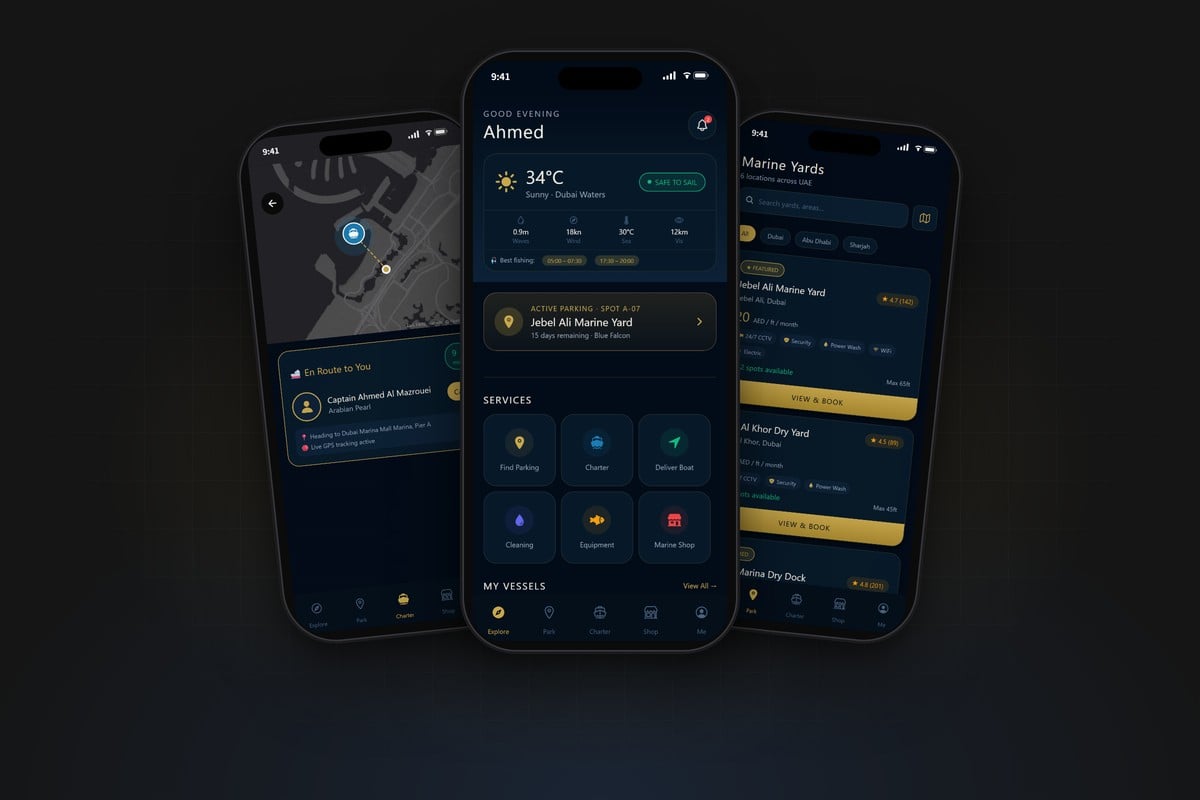
A marine services app for UAE boat owners, with dry parking, boat launch and delivery, captain charters and a marine shop, on React Native and a real-time Node.js backend.
React Native
Expo
TypeScript
Redux Toolkit
Node.js
Express
MongoDB
Mongoose
Socket.io
JWT
node-cron
THE STORY
Marina wet berths in Dubai cost about 67 AED per foot per month. Dry yards cost far less, 15 to 30 AED per foot, but booking them, arranging a tow to the water and finding a captain all happen over phone calls and WhatsApp. Nothing handled storage, logistics and time on the water together, or showed owners where their boat is.
A React Native (Expo) app on an Express and MongoDB API, with Socket.io for live locations and notifications and a cron scheduler for the booking lifecycle.
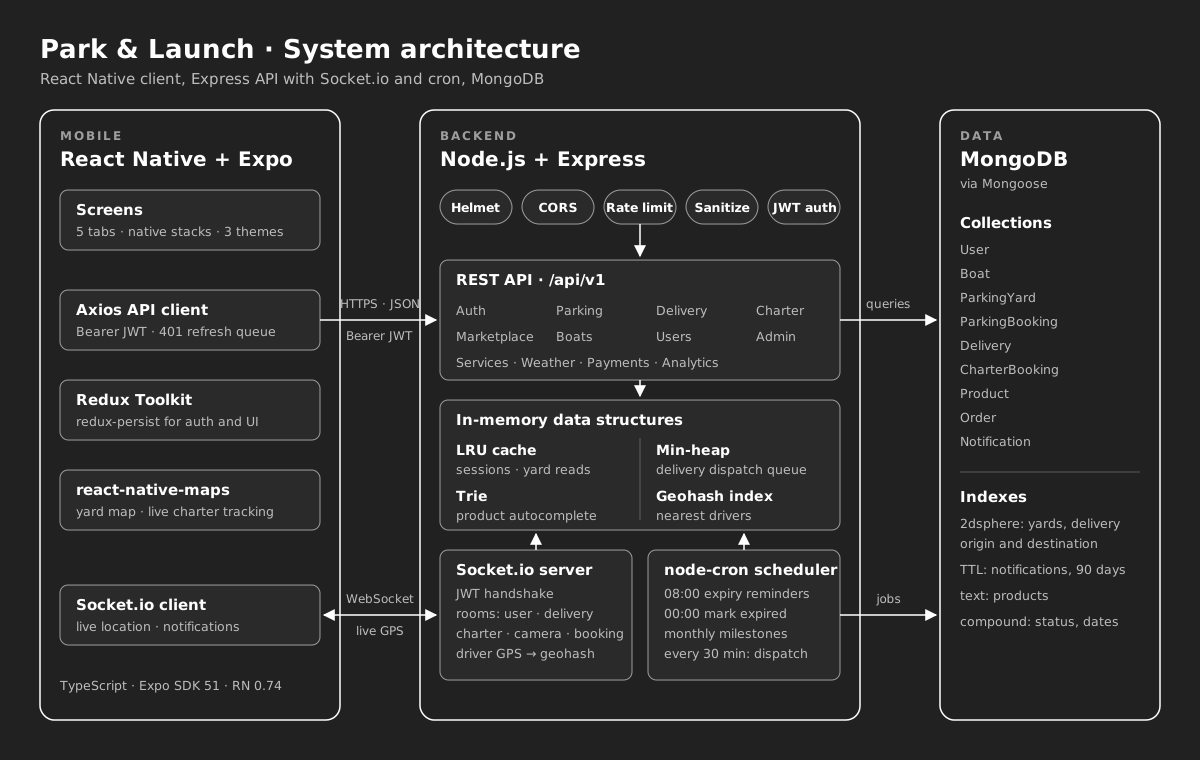
2dsphere indexes answer "yards within this radius" and delivery origin and destination queries.The backend covers every domain above, and sign-in on mobile runs against the API. Other screens still render bundled demo data, and a few (delivery scheduling and tracking, product detail, captain profile) are placeholders.
USER FLOWS
01Welcome tourFour-slide intro to parking, delivery, charters and yard cameras.
02Sign inEmail sign-in against the API, issuing JWT access and refresh tokens.
03Home dashboardMarine weather, active parking, quick services and vessels at a glance.
04Marine yardsDry-storage yards with per-foot pricing, amenities and available spots.
05Yards mapMap view of yard locations along the Dubai and Sharjah coast.
06Price calculatorPlan pricing with annual discounts and savings versus marina wet berths.
07Spot bookingActive booking with assigned spot, plan, boat and days remaining.
08Charter tripsFishing, sunset and island trips with hourly rates and inclusions.
09Charter detailsTrip summary with captain, vessel, departure marina and total cost.
10Live GPS trackingCaptain's boat on the map with route line and live ETA.
11Marine shopCategory filters, search and featured gear from Garmin to Shimano.
12Shopping cartQuantity controls, free-shipping threshold and VAT-inclusive order summary.
13Account profileAccount hub, shown here in the Midnight Marina theme.
14Theme pickerThree themes: Deep Ocean, Pearl Harbor and Midnight Marina.
CONTACT
Have a role or a project in mind? Send me a message and I'll get back to you the same day.